Find Your Lingerie Size
Finding your lingerie size starts with three measurements: your bust, waist, and hips. Use a soft measuring tape and measure your bust at its fullest point, your natural waist, and the fullest part of your hips. Then compare those measurements with the size chart for the specific piece you're interested in.
Your usual clothing size is a useful starting point, but don't rely on it alone. Lingerie can fit differently from one brand or style to another, and some pieces are designed as one-size-fits-most. The measurements listed on the product's size chart will give you a much better idea of which size to choose.
Adam & Eve lingerie size charts may include dress size, cup size, and bust, waist, and hip measurements. Check the chart for the individual piece before ordering, since sizing can vary between styles.
Once you have your measurements, you can focus on finding the lingerie style, fabric, and fit you like rather than guessing at the size.
How To Measure For Lingerie
A soft, flexible tape measure is the easiest way to take your lingerie measurements. You can measure yourself or have someone help you. Either way, stand naturally with your feet together, your arms relaxed at your sides, and your weight evenly distributed. Keep the tape level with the floor and snug against your body without pulling it tight. Breathe normally while you take each measurement. The World Health Organization's expert consultation on waist and hip measurements recommends keeping the tape in a horizontal position and avoiding pressure on the skin when taking body measurements.
The same approach works well when measuring for lingerie.
Bust: Wrap the tape around the fullest part of your bust, making sure it stays level across your back.Waist: Find your natural waist, usually the narrowest part of your torso, and measure around it without pulling the tape tight.Hips: Measure around the fullest part of your hips and seat, keeping the tape parallel to the floor.
Take each measurement twice to make sure you get a consistent number. If the measurements don't match, check that the tape hasn't slipped or twisted and measure again.
If you're shopping for lingerie with cups, keep your usual bra size handy, too. Some lingerie size charts include both cup size and body measurements, so having both can make it easier to find the right size.
It's worth measuring again before shopping if it's been a while since you last checked your measurements. Even small changes can affect how lingerie fits, so using your current measurements gives you the best starting point.
How to Choose the Right Size for Different Lingerie Styles
Different lingerie styles fit your body in different places, so the measurements that matter most can vary. Once you have your bust, waist, and hip measurements, use the size chart for the specific piece to see which ones you need to pay closest attention to.
Teddies and babydolls: For styles with cups or built-in bust support, start with your bust and cup size. With a teddy, check your hip measurement as well, since the one-piece design needs enough room through the lower half of your body.
Corsets and bustiers: These styles usually fit more closely around the bust and waist, so compare both measurements with the size chart. If your measurements fall into different sizes, check the product's fit notes before deciding which one to choose.
Panties, thongs, garters, and hosiery: Your waist and hip measurements are the most useful starting points. For bodystockings, check your bust as well, since the piece needs to fit comfortably across your entire body.
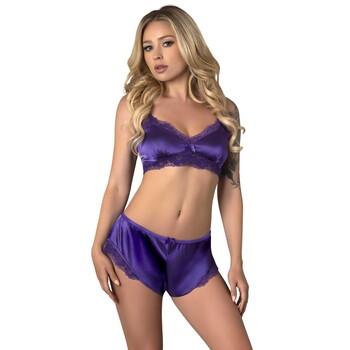
Lingerie sets and chemises: When a style includes both a top and bottom, your bust, waist, and hip measurements can all matter. Use the chart for the specific set or chemise rather than assuming your usual clothing size will translate directly.
The same approach works for bridal lingerie, sleepwear, loungewear, and men's lingerie: start with your measurements and then use the size chart for the piece you're considering.
Fabric shapes how a piece feels against your skin once it's on, so it's worth thinking about before you choose. Our guide to choosing lingerie by material walks through the options.
How to Find a Comfortable Lingerie Fit Including Plus Size
A good fit should feel comfortable as well as look good. Adam & Eve lingerie size charts include options such as S/M, M/L, L/XL, 1X/2X, 3X/4X, and Queen, but the measurements for each size can vary by style. Compare your bust, waist, and hip measurements with the chart for the specific piece you're considering rather than relying on the size you usually wear.
Plus-size lingerie should offer the same balance of comfort, support, and fit as any other size. Depending on the style, you may want to pay particular attention to the bust and hip measurements, as well as adjustable straps, bands, or closures that let you customize the fit. If you're shopping plus-size lingerie, use the measurements listed for that specific piece rather than assuming that the same size will fit every style. Our guide to buying plus-size lingerie provides more useful tips so you can make more informed, and comfortable, choice.
When you're trying on lingerie, look for a fit that feels secure without being too tight. Bands should sit comfortably without digging in, cups should cover the bust without gaps or spilling over, and straps shouldn't leave painful marks. If something pinches, pulls, or feels restrictive, try another size or a different style.
It's also completely normal for your lingerie size to be different from the size you wear in everyday clothing. Lingerie sizing varies between brands and styles, which is why taking your measurements and checking the product's size chart is more reliable than going by the label alone.
If you're shopping for a partner, their usual lingerie, bra, or dress size can give you a starting point. You can also check the tags on pieces they already own, or shop together so they can choose the style and fit they prefer. The guide to buying lingerie for someone else has more ideas, and looking and feeling good in lingerie is worth a read for whoever's wearing it.
What to Do When You're Between Lingerie Sizes
If your measurements fall between two sizes, the larger size is often the more comfortable choice, especially for a fitted piece with little stretch. Fabric and design can make a difference, though, so check the product details for features such as stretch, adjustable straps, ties, or closures that let you customize the fit.
If your bust, waist, and hip measurements fall into different size ranges, focus on the measurement that's most important for the style. For example, bust measurements matter most for cupped tops and bustiers, while waist and hip measurements are more important for panties, garters, and hosiery. With one-piece styles and other pieces that need to fit several areas at once, sizing up can give you a little more room to move comfortably.
You can also use the way a piece fits as a guide. Slipping straps, a band that rides up, gaping cups, or fabric that digs into your skin may mean you need a different size or style. If you're unsure, take your measurements again and compare them with the product's size chart.
Once you've found a piece that fits well, check the care label before washing it. Clothing care labels in the U.S. generally provide washing and drying instructions, along with warnings when a particular method could damage the garment. The Federal Trade Commission's guide to the Care Labeling Rule explains the requirements, while hosiery such as tights and stockings can use a removable care tag instead of a sewn-in label. Keep that tag until you know how to care for the piece properly.
Shop Adam & Eve Lingerie
Once you have your measurements, you can start shopping. Browse Adam & Eve lingerie by style, then check the size chart for each piece and choose the size that best matches your measurements. If you're between sizes, consider sizing up for a more comfortable fit.
If you'd like a little inspiration first, you can explore women's lingerie, see what's fresh in new lingerie, or start with the best lingerie at Adam & Eve. Stockings or garters can finish the look, so consider adding a pair once you've chosen your main piece. Most of all, pick the style that makes you feel comfortable, confident, and excited to wear it.