There’s a moment many women experience that feels strangely difficult to explain.
Your body still looks like your body. Your life is still your life. But suddenly, things feel… different. Sleep becomes lighter. Mood swings appear without warning. Your skin changes texture. Intimacy may become uncomfortable when it never was before.
And for many women, that’s the moment the question finally appears: “Could this be perimenopause?”
So, What Is Perimenopause?
Perimenopause is basically the “in-between” phase before menopause, when hormones start doing a bit more of a slow fade. It can begin as early as your late 30s or early 40s and may last a few years… or stretch out much longer than expected.
During this time, estrogen and progesterone don’t exactly follow a schedule. One month things might feel fairly normal, and the next it can feel like everything has shifted overnight. Those fluctuations can ripple through almost everything including energy, mood, skin, brain fog, metabolism, and even vaginal health.
Unlike menopause, which is confirmed after 12 straight months without a period, perimenopause is more about inconsistency than certainty. Cycles can get shorter, longer, heavier, lighter, or just unpredictable enough to keep you guessing.
And while hot flashes tend to steal the spotlight, a lot of women find that the less-talked-about symptoms are the ones that really sneak into daily life and make themselves known.
Common Symptoms: Dryness, Sensitivity, and Libido Shifts
One of the more unexpected changes during perimenopause can show up in vaginal and vulvar tissue and it’s often one of those “wait, no one warned me about this” moments.
As estrogen levels drop, the vaginal lining can become thinner, less stretchy, and not as naturally lubricated as before. That can lead to things like:
- Unexpected dryness
- Burning or itching that comes and goes
- Extra sensitivity or irritation
- Discomfort during intimacy
- More frequent urinary discomfort
- Shifts in arousal or libido
For some women, it’s a slow shift over time. For others, it feels like it shows up all at once.
The important thing to remember is that nothing is “wrong” with you. These changes are part of a hormonal transition, not a reflection of desire, identity, or who you are. Just your body, adapting to a new normal.
Why Vaginal Health Changes During Perimenopause
Estrogen plays a major role in maintaining the health of vaginal tissue. It supports elasticity, moisture, circulation, and the delicate balance of the vaginal microbiome.
When estrogen fluctuates and declines, the body responds in noticeable ways:
- Natural lubrication decreases
- Tissue becomes more delicate
- Dryness and irritation become more common
- Sensitivity increases
This is why so many women begin searching for solutions that help them feel comfortable in their bodies again, not just during intimacy, but throughout everyday life.
The good news? Recognizing the changes taking place can make this phase feel far less overwhelming, and brands like Kindra are giving women greater access to education, support, and modern wellness options designed for this stage of life.
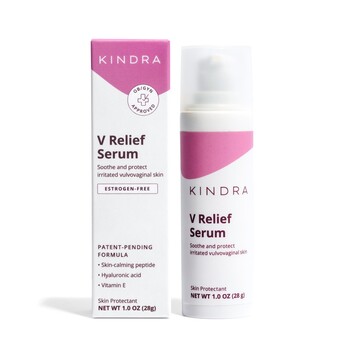
Kindra is redefining vulvovaginal wellness with science-driven intimate care created for women through every hormonal shift and life stage. Whether addressing dryness linked to GLP-1 medications, postpartum recovery, perimenopause, or menopause, the brand is focused on making intimate wellness a more open, informed, and supported part of women’s health.
Its collection of estrogen-free products is developed with doctor-trusted ingredients and backed by extensive scientific research, including more than 160 clinical studies. The lineup features patent-pending intimate moisturizers, lubricants, gentle vulva care, and wellness supplements formulated to promote hydration, soothe sensitivity, and restore everyday confidence through thoughtful, science-led self-care.
Perimenopause may shake things up downstairs, but with a little knowledge and the right support, your vaginal health can still thrive through every phase of the journey.
The Emotional and Relationship Impact
Perimenopause doesn’t just show up in the body, it can also spill over into mood, confidence, and even relationships, which can make things feel a little off.
Because hormones are closely tied to mood regulation, it’s pretty common to notice things like:
- A little more anxiety than usual
- Mood swings that seem to come out of nowhere
- Irritability over things that normally wouldn’t matter
- Brain fog (where did I put that thought again?)
- Increased tiredness
- Confidence taking a bit of a dip
And when physical symptoms and emotional ups and downs overlap, intimacy can sometimes feel less spontaneous and more complicated than it used to.
It can also be confusing on the outside looking in, especially for partners who can’t see what’s going on. That’s where simple, honest communication helps a lot. Sharing that shifts in desire or comfort are coming from hormonal changes, not changes in love or attraction, can take a lot of pressure off both partners.
At the end of the day, perimenopause isn’t “just getting older.” It’s a major hormonal transition and it deserves understanding, support, and a little extra care along the way.
How to Support Your Body During Perimenopause
Perimenopause doesn’t come with a rulebook, and honestly, no two experiences look exactly alike. The good news? There are plenty of ways to support your body while it adjusts to all the hormonal plot twists.
- Drink more water
- Protect your sleep
- Find stress relief that works for you — walks, workouts, deep breaths, etc.
- Aim for balanced meals that help keep your energy and mood
- Give yourself permission to slow down and listen to your body
And if symptoms start interfering with your daily life, you don’t have to just deal with it. Using treatments like those from Kindra or even talking with a healthcare provider can open the door to options like hormone therapy, pelvic floor therapy, localized estrogen treatments, or other personalized care that can help make this stage feel a whole lot more manageable.
A Different Way to Think About Perimenopause
A different way to think about perimenopause is to see it less like something to “get through” and more like a series of unexpected updates your body rolls out on its own schedule. Some are helpful, some are confusing, and a few make you stop mid-day and think, “okay… interesting.” But underneath all of it is a chance to get more in tune with yourself and what feels good, what doesn’t and what you’re officially done putting up with. It’s not about trying to rewind to who you were before. It’s just you, getting to know a slightly newer version of your body.